The Lab · Case study
OrOGramme
Different listings. A clearer comparison.
OrOGramme starts with a simple question: how can people compare second-hand gold jewellery when listings are spread across websites and describe items differently?
The problem
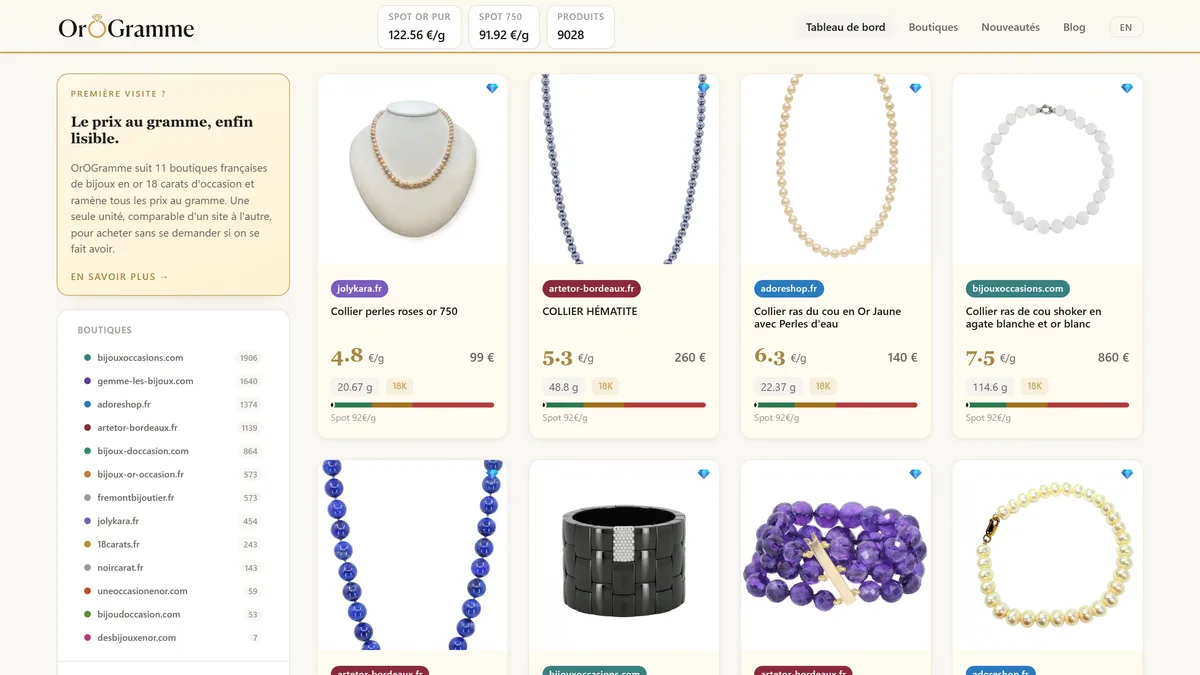
Eleven resale sites, inconsistent listings, and no simple way to compare the real price per gram.
My role
Product design, scrapers, data quality checks, interface and launch — solo.
Decisions behind the product
Treat data as product work
Collectors feed a shared dataset from inconsistent sources. Weight, gold purity and price need to be interpreted before becoming comparison criteria.
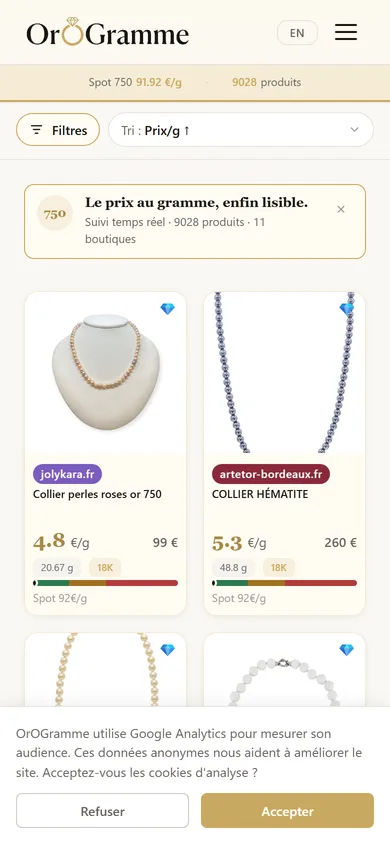
Make price per gram visible
The interface centres price per gram and filtering. The calculation offers a common reference; it does not replace reading the listing and seller conditions.
Check the comparison
Quality checks are part of the product, just like the interface. A readable ranking only makes sense if the underlying data is consistent.
The stack
Angular, scrapers across eleven sources, 18-carat minimum filter, sorting by price per gram, back end hosted on Railway.
The outcome
Live: a price-per-gram ranking whose reliability is tested, not assumed.
What this project demonstrates
A comparator’s value comes from its data as much as its interface. This project connects collection, verification and user experience.